Properly functioning bike brakes are essential for rider safety and optimal performance. Whether you commute through busy streets or explore winding trails, understanding how to address common issues can save time, money, and stress. This guide dives into the most frequent brake problems, step-by-step troubleshooting, and practical fixes to get you back on the road with confidence.
Common Types of Bike Brakes
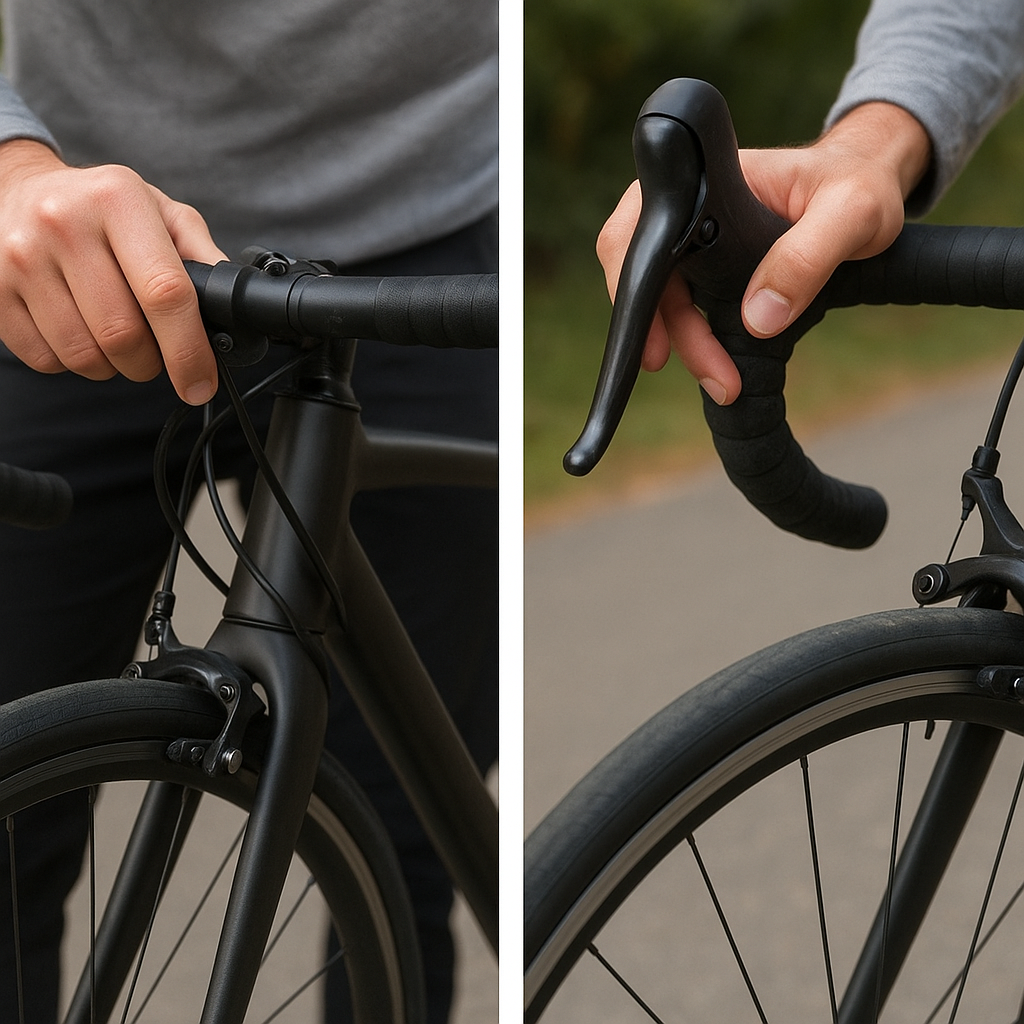
Your repair approach depends on the brake system installed on your bicycle. The two primary types are rim brakes and disc brakes. Each design has strengths and weaknesses, but both require routine care to maintain alignment and stopping power.
- Rim Brakes: Include side-pull calipers, cantilever, and V-brakes. These rely on brake pads clamping onto the wheel rim.
- Disc Brakes: Hydraulic or mechanical, using calipers to squeeze a rotor attached to the hub.
- Coaster Brakes: Integrated into the hub; engaged by pedaling backward, common on single-speed or cruiser bikes.
Each system has its own set of components—pads, cables or hoses, rotors or rims—so learn which parts your bike uses before starting any repairs.
Diagnosing Brake Problems
Symptoms to Watch For
- Squeaky or grinding noises during braking
- Spongy or soft lever feel
- Weak stopping power
- Uneven pad wear or rim/rotor contamination
- Leaking hydraulic fluid (for disc brakes)
Inspecting Brake Pads and Rotors
Worn pads and contaminated rotors are the most frequent culprits behind poor braking. Look for glazing, embedded debris, or oil spots on the surfaces. Rotors should be free of warps and maintain a smooth edge.
Checking Cable Tension and Housing
For mechanical systems, cables can stretch or fray over time, leading to reduced responsiveness. Examine the cable housing for kinks, cracks, or buildup that might hinder smooth movement.
Assessing Hydraulic Systems
Hydraulic disc brakes require proper lubrication of the fluid and no air bubbles in the line. If the lever feels mushy or continues to pull without stopping, an air bleed or fluid top-up may be necessary.
Simple Fixes for Rim Brakes
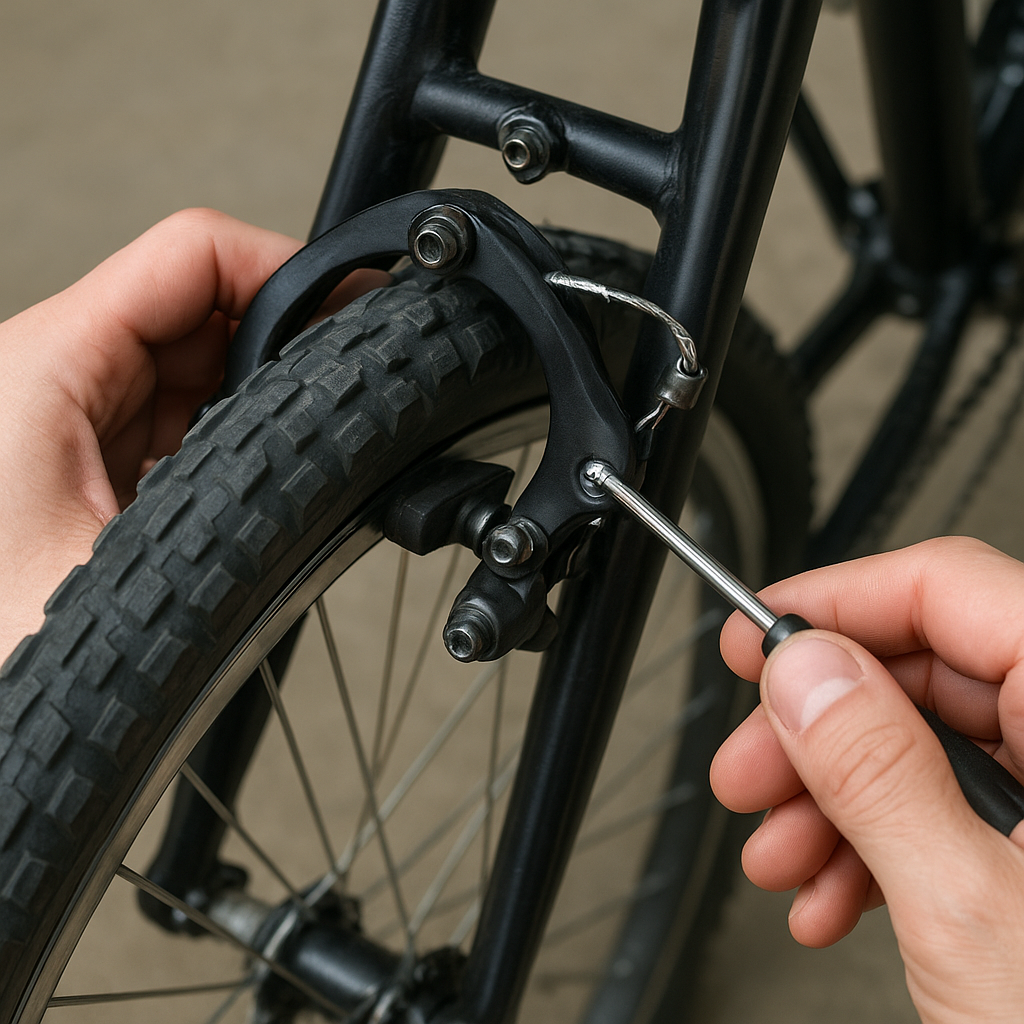
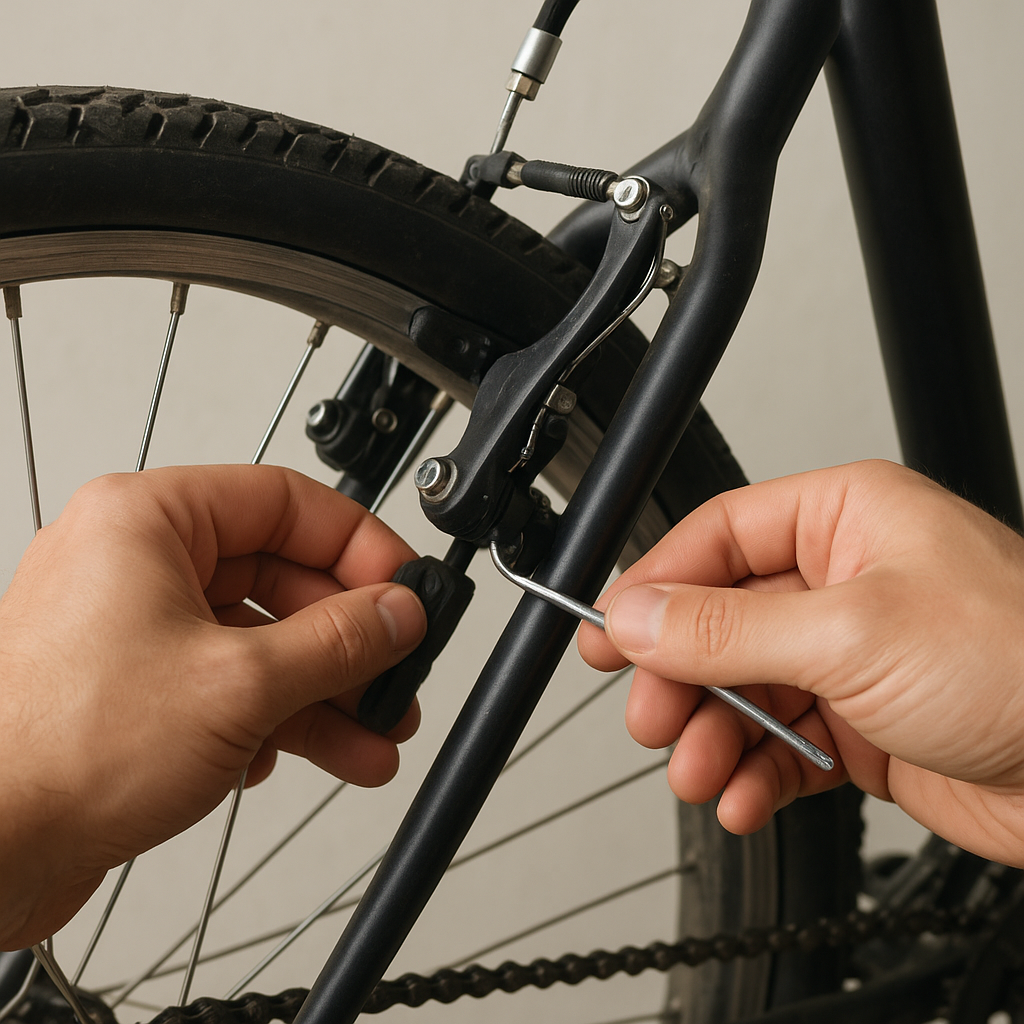
Addressing rim brake issues often involves pad alignment and cable adjustments.
Realigning Brake Pads
- Loosen the pad retaining bolt slightly.
- Position the pad so its full surface contacts the rim when engaged, avoiding tire overlap.
- Toe-in the pad’s leading edge by 1–2 mm to reduce squealing.
- Tighten the bolt while holding the pad in place.
Adjusting Cable Tension
- Release the quick-release or barrel adjuster to slacken the cable.
- Squeeze the brake arms together and pull the cable taut.
- Secure the cable clamp and fine-tune using the barrel adjuster for a firm lever feel.
- Trim any excess cable and cap the end to prevent fraying.
Cleaning Rims and Pads
Use isopropyl alcohol or a specialized bike cleaner to remove contamination. Avoid lubricants near braking surfaces. Wipe thoroughly and test brake performance before each ride.
Simple Fixes for Disc Brakes
Disc systems demand precise rotor alignment and hydraulic integrity.
Straightening a Bent Rotor
- Secure the wheel in a truing stand or leave it in the frame.
- Locate the rotor rub by spinning the wheel and stopping it with your fingers.
- Use a rotor truing fork or an adjustable wrench to gently bend the bent section back into plane.
- Re-check spin clearance until it runs true between the pads.
Bleeding Hydraulic Brakes
If the lever feels sponge-like, air may be trapped in the line. Follow your brake manufacturer’s bleed kit instructions:
- Attach the syringe with brake fluid to the caliper bleed port.
- Open the bleed valve and slowly push fluid through, capturing old fluid and air in the return syringe.
- Tighten the bleed valve and wipe away excess fluid. Check lever firmness.
Pad Replacement
Worn pads reduce stopping force and can damage the rotor. Replace pads when thickness drops below the manufacturer’s minimum:
- Remove the wheel and caliper retaining pin or clip.
- Pry out old pads and clean the caliper interior.
- Insert new pads and secure them with the pin. Reinstall the wheel and check pad clearance.
Preventive Maintenance for Long-Lasting Brakes
Regular care extends component life and ensures consistent performance.
- Inspect brake pads and rotors monthly, especially after muddy or wet rides.
- Lubricate pivot points on mechanical brakes, avoiding the braking surface.
- Clean rotors with isopropyl alcohol before every ride if you notice noise or reduced grip.
- Check hydraulic fluid levels and bleed every six months or after heavy use.
- Store your bike in a dry area to prevent corrosion on metal parts.
Tools and Supplies You’ll Need
- Hex wrenches and spoke wrench
- Rotor truing fork or adjustable wrench
- Cable cutters and end caps
- Brake fluid and bleed kit (for hydraulic brakes)
- Isopropyl alcohol and clean rags
- New brake pads and replacement cables