Cycling offers an exhilarating blend of speed, distance, and personal challenge, but unlocking your full potential means paying attention to more than just your bike setup. A well-designed warm-up and cool-down routine can dramatically improve flexibility, boost performance, and reduce the risk of overuse injury. Whether you’re preparing for a long road trip or winding down after a demanding ride on rugged terrain, dedicating time to targeted stretches empowers your body with enhanced mobility and fosters faster recovery.
Importance of Proper Stretching
Before clipping in, your muscles, tendons, and joints need to be primed for the repetitive motions inherent in cycling. Engaging in dynamic stretches activates muscle fibers, increases blood flow, and improves neuromuscular coordination. After the ride, static stretching helps release built-up tension, encourages cellular renewal in muscle tissue, and maintains optimal flexibility over time. Consistent attention to these routines fosters better posture on the saddle, maximizes overall performance, and enhances long-term endurance.
Ignoring your body’s cues can lead to stiffness, joint strain, and a decline in efficiency. By integrating a structured stretching plan, you lay the foundation for safer rides and the joyful exploration of new routes, confident in the resilience of your muscles and joints.
Pre-Ride Stretches to Activate Muscles
Dynamic stretching replicates the movements you’ll perform on the bike, gradually increasing heart rate and joint range of motion. Perform each exercise for 30–45 seconds on both sides, maintaining smooth, controlled motions.
-
Leg Swings
Stand beside a support and swing one leg forward and backward, keeping your torso upright. This stretch targets hip flexors and hamstrings, essential for efficient pedaling.
-
Arm Circles and Cross-Body Swings
Rotate your arms in wide circles, then swing them across your chest. This movement improves shoulder mobility and helps stabilize your upper body on the handlebars.
-
Hip Openers
Lift one knee toward your chest, then rotate it outward in a circular motion. This dynamic hip stretch increases joint lubrication and prepares you for powerful downstrokes.
-
Walking Lunges
Take a long step forward, lower into a lunge, and push through your heel to stand. Repeat, alternating legs. Lunges engage quads, glutes, and calves, heightening muscle activation.
-
Trunk Rotations
Stand with feet hip-width apart and rotate your torso side to side. Rotations warm up the lower back and core stabilizers needed for sustained riding posture.
Post-Ride Stretches to Enhance Recovery
After dismounting, transition into static stretches to gently lengthen muscles and reduce post-ride soreness. Hold each position for 30–60 seconds without bouncing, and breathe deeply to facilitate muscle relaxation.
-
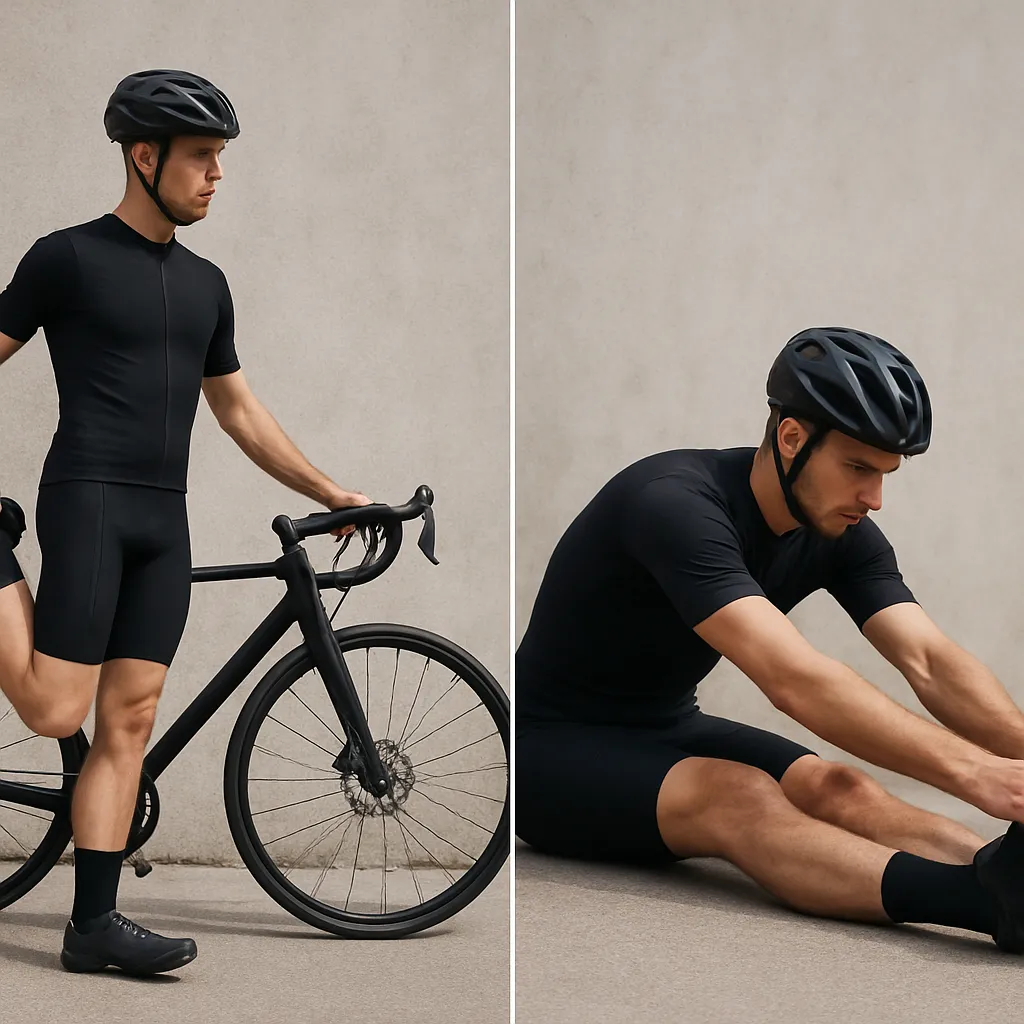
Hamstring Stretch
Sit on the ground with one leg extended and the other bent inward. Reach toward your toes, keeping your back straight. This stretch alleviates tension in the back of the thigh.
-
Quadriceps Stretch
Stand on one foot, pull the opposite heel toward your glutes, and gently press your knee backward. This static hold reduces tightness in the front thigh muscles.
-
Calf Stretch
Place both hands on a wall, step one foot back, and press the heel downward. This position promotes ankle flexibility and assists with efficient pedal strokes.
-
Hip Flexor Stretch
In a lunge stance, lower your back knee to the ground and shift your weight forward. You’ll feel a stretch at the front of the hip, where cycling often creates tightness.
-
Lower Back Stretch
Lie on your back, hug both knees into your chest, and gently rock side to side. This release helps soothe lumbar tension accumulated during long rides.
Advanced Tips and Best Practices
To maximize the benefits of your stretching routine, follow these guidelines:
- Maintain consistency: Schedule stretching sessions before and after every ride to build sustainable habits.
- Stay hydrated: Proper muscle function relies on adequate fluids—hydrate before, during, and after cycling.
- Focus on form: Ensure each stretch targets the intended muscle group without overextending or forcing the range of motion.
- Pair with foam rolling: Self-myofascial release complements static stretching by breaking down adhesions and improving blood flow.
- Listen to your body: Mild discomfort is normal, but sharp pain signals excessive strain. Prioritize prevention over pushing through agony.
By weaving these elements into your cycling routine, you’ll cultivate robust muscles, refined technique, and a decreased likelihood of setbacks—keeping you on two wheels and exploring new horizons with confidence.